
Explore the structure, outcomes, eligibility, and pathways of this program at Greenwich University.
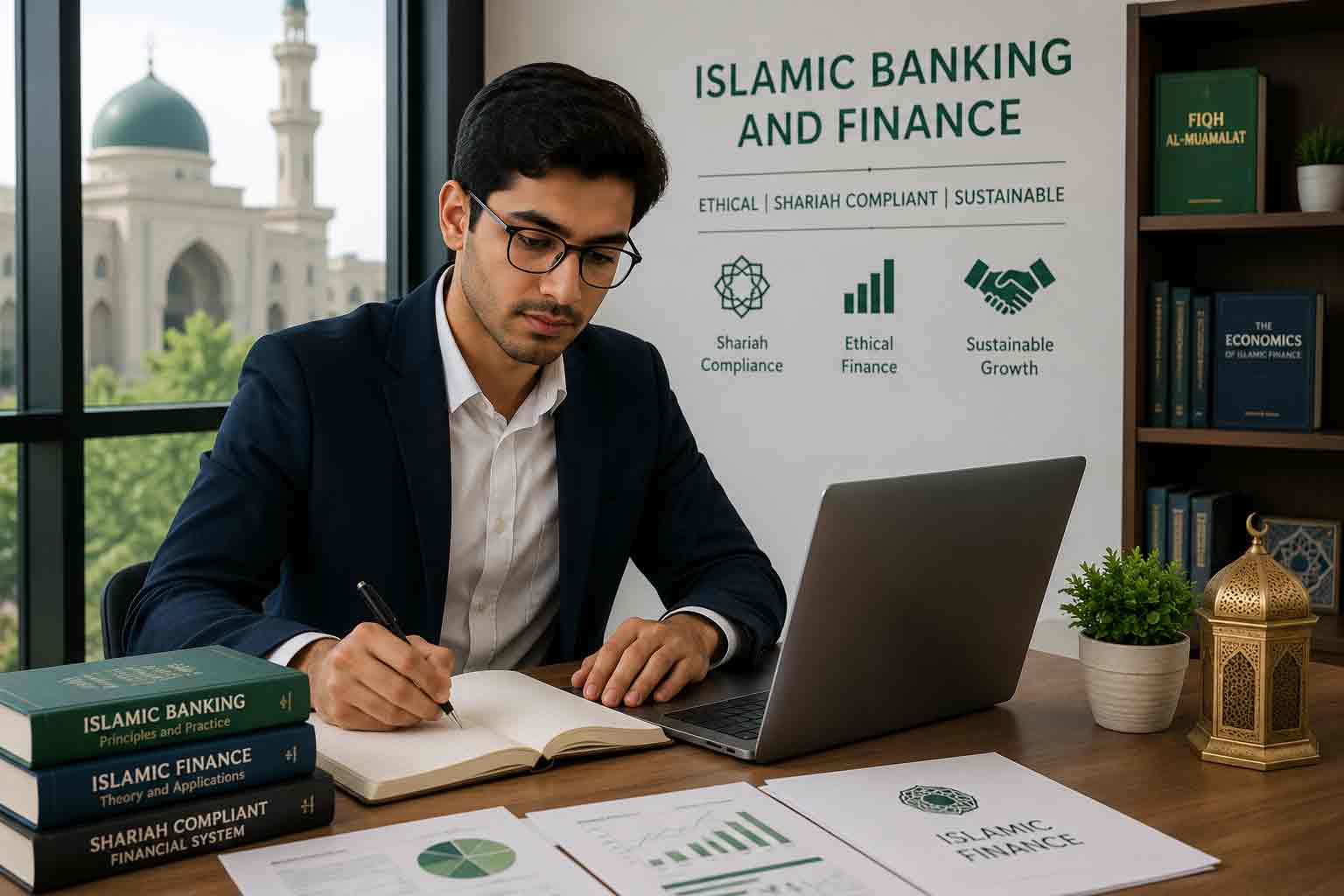
The Bachelor of Science in Islamic Banking and Finance is a four-year undergraduate program designed to develop comprehensive knowledge of Shariah compliant financial systems and modern banking practices. The program integrates principles of Islamic finance with contemporary financial management, covering areas such as Islamic banking operations, financial markets, Takaful, and Shariah governance. It emphasizes ethical finance, risk sharing, and asset backed transactions aligned with Islamic economic principles. The curriculum combines general education, core business courses, and specialized Islamic finance domain courses to prepare graduates for evolving financial environments. Graduates are equipped to work in Islamic financial institutions, regulatory bodies, and corporate sectors or pursue advanced studies in finance and related disciplines.
The basic eligibility requirement for admission to the Bachelor of Science in Islamic Banking and Finance is a Higher Secondary School Certificate HSSC, A levels, or an equivalent qualification recognized by the IBCC, involving 12 years of schooling with a minimum of 50 percent marks.
· Opportunities in Islamic banks, financial institutions, and Shariah compliant investment firms · Roles in Islamic finance operations, risk management, and financial analysis · Positions in Takaful companies, Islamic microfinance, and financial consultancy services · Employment in regulatory authorities, compliance departments, and Shariah advisory boards · Career opportunities in corporate finance, auditing, and Islamic capital markets
The Bachelor of Science in Islamic Banking and Finance at Greenwich University offers a specialized education aligned with the growing global demand for Shariah compliant financial services. The program equips students with strong theoretical and practical knowledge of Islamic financial principles and modern banking practices. With a focus on ethical finance, regulatory frameworks, and industry relevance, students gain the skills required to operate in both local and international financial markets. The curriculum supports professional development and pathways toward specialized certifications in Islamic finance. This program is ideal for students seeking careers in ethical finance, banking, and global financial institutions.